
Servant of the Lake
Rusty LakeAdventure
4.9272.00 Reviews
- Version
- 1.6.2
- Installs
- 10.00K
- Age Rating
- Teen
Screenshots
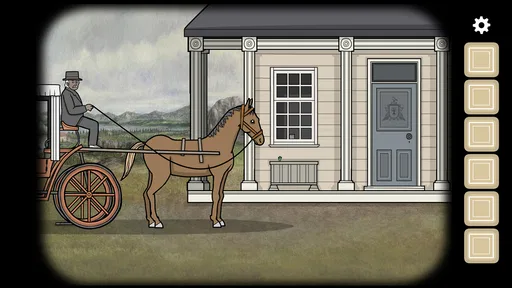
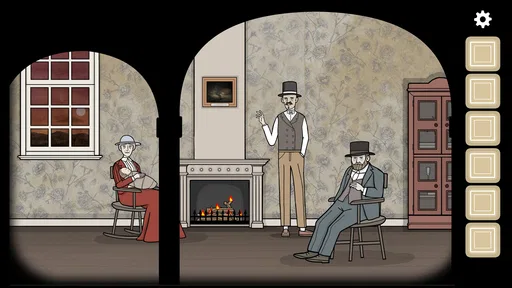
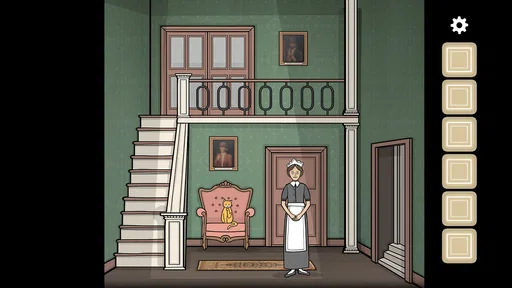
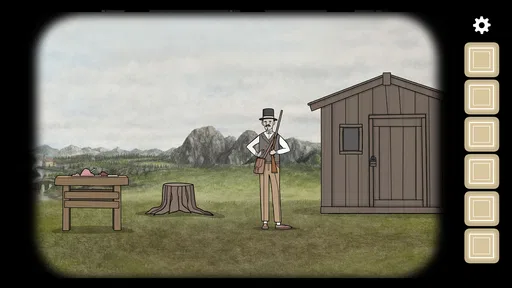
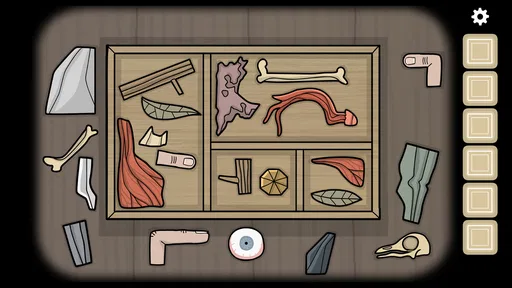
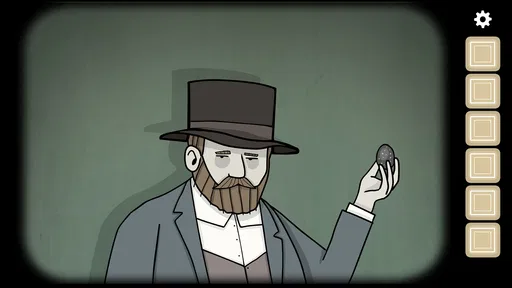
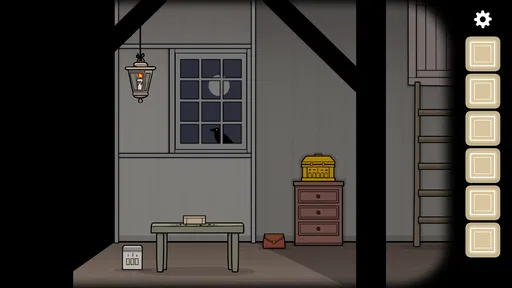
Our Review of Servant of the Lake
 Analysis by Appyee
I approached Servant of the Lake expecting the kind of strange, carefully staged puzzle adventure that has made Rusty Lake stand out, and that expectation shaped my experience from the first scene. This is a paid point-and-click adventure from Rusty Lake, placed firmly in the series’ unsettling world rather than in the more action-heavy side of the adventure genre. It asks me to observe, experiment, connect clues, and accept that the story may stay mysterious even after I understand what I am supposed to do next.
The game costs $4.99, so the decision is refreshingly simple: there is no free-access version to weigh against a subscription or a collection of optional purchases. I am paying for the game itself. That makes the important question less about avoiding surprise spending and more about whether a compact, unusual puzzle experience is worth that fixed price for my taste. With an average rating of 4.9 from around 6.2K ratings and more than 10K installs, it has clearly found an audience, although those figures are best treated as signs of strong reception rather than a guarantee that every player will enjoy its deliberate pace.
How the mystery works in practice
At its core, this is an adventure built around clicking through scenes and examining what the environment is willing to reveal. I do not play it for reflexes, combat, or a long list of conventional missions. The pleasure comes from noticing a detail that looked decorative, testing an object in the right context, and gradually turning an apparently disconnected set of images into a workable chain of actions.
That design gives every room a different kind of tension. A locked object is rarely just a lock; it is usually an invitation to inspect the surroundings more carefully. I found myself switching between broad observation and very narrow attention. One moment I was taking in the mood of an entire location, and the next I was checking a symbol, a sequence, or an interaction that could easily be overlooked when playing too quickly.
The Rusty Lake identity matters here. The atmosphere is not a thin layer placed over ordinary puzzles. The unsettling imagery, odd logic, and story fragments work together, so even a small interaction can feel meaningful. I would not describe the narrative as a straightforward explanation of events. It is closer to assembling a disturbing dream from objects, gestures, and implications. Players who enjoy interpreting strange fiction will probably get more from it than players who need every plot point stated clearly.
One useful way to play is to treat the screen like a notebook rather than a stage. I pay attention to repeated shapes, unusual arrangements, and anything that appears too deliberate to be background decoration. When I reach a dead end, I do not immediately tap everything randomly. I revisit earlier areas with one specific question in mind: what did I see that I never used? That habit is especially valuable in a point-and-click game, where progress often depends on recognizing a relationship rather than finding a new location.
A quieter kind of challenge
The challenge is observational and interpretive, not physical. That makes the game suitable for short sessions, but it also means the experience can stall if I miss one important visual cue. A player who enjoys solving puzzles independently may see that pause as part of the satisfaction. Someone who wants constant forward movement may experience the same moment as friction.
I recommend keeping a small note on paper or on a separate device if you are the sort of player who forgets sequences easily. Writing down a symbol or a suspicious order of objects is not overkill here; it prevents repeated wandering and lets you focus on the actual deduction. I also prefer playing with notifications out of reach, because the game’s impact depends on maintaining attention to small details and its deliberately uncomfortable mood.
Another practical tip is to resist the urge to use a walkthrough after the first difficult puzzle. In this style of adventure, a solution can remove more than one obstacle: it can also reveal the intended rhythm of observation, experimentation, and interpretation. If I do need help, I would first review my notes and inspect every previously visited scene before looking up a single answer. That preserves much more of the experience than searching for a complete solution immediately.
What the paid price changes
The $4.99 price positions Servant of the Lake as a straightforward paid purchase rather than a free sampler. I appreciate that clarity. I can decide based on the kind of experience I want, without having to calculate whether optional spending will interrupt the game or whether the most interesting content is held behind another payment.
That price is easier to justify for me when I view the game as a focused evening or weekend adventure rather than as an endlessly replayable pastime. Point-and-click mysteries usually deliver their strongest value during the first solve, when every discovery is fresh. After I know the answers, the atmosphere may still invite a return visit, but the central investigative surprise naturally becomes smaller.
This also means the game is not the best purchase for someone measuring value by hours alone. A large open-world adventure, a long role-playing game, or a free game with ongoing content may provide more total playtime. That does not automatically make those alternatives better. Servant of the Lake is selling concentration, mood, and a curated mystery. If that is what I want, a shorter paid experience can feel more satisfying than a much larger game filled with tasks I do not care about.
The age guidance is Teen, which fits the game’s eerie tone and unsettling imagery. I would not choose it as a casual game for a young child simply because the controls are simple. The absence of action does not make the atmosphere gentle. For older players who enjoy psychological unease without needing a conventional horror game, that tone is one of the strongest reasons to consider it.
Where it stands beside other adventure games
Compared with a traditional hidden-object game, this feels less like a checklist and more like a chain of strange deductions. Hidden-object alternatives can be relaxing because they clearly tell me what kind of visual task I am performing. Here, I have to decide what matters before I can solve anything, which creates more uncertainty but also more personal involvement.
Compared with a narrative adventure that emphasizes dialogue choices, this puts more responsibility on observation and interaction. I am not primarily shaping a conversation or selecting a moral response. I am trying to understand the environment’s private logic. Players who prefer character-driven scenes and frequent dialogue may find the experience too opaque, while fans of environmental storytelling are likely to appreciate how much meaning is packed into small details.
It also differs from a casual puzzle app designed for quick, disconnected challenges. The puzzles here belong to a particular atmosphere and story, so solving one is not merely a score-producing exercise. The trade-off is that I cannot always dip in for a completely context-free five-minute round. A short session works, but I get more from it when I remember what I was investigating and why an object seemed important.
For fans of Rusty Lake, this is naturally more appealing than a generic adventure because the developer’s distinctive approach is the point. For newcomers, the series’ reputation is not a substitute for personal taste. If surreal settings, uncomfortable symbolism, and puzzles that sometimes ask me to think laterally sound appealing, this is a sensible entry to consider. If I prefer realistic worlds and explicit instructions, the same qualities may become barriers rather than attractions.
Small decisions that improve the experience
I found three habits particularly useful. First, I inspect the edges of a scene before interacting with the obvious central object. Visual adventure games often teach me to focus on what looks important, but unusual details at the margins can provide the missing connection. Second, I group clues by type instead of by location: symbols together, sequences together, and objects with similar shapes together. That makes patterns easier to notice when the game does not announce their relationship.
Third, I separate “I do not know the answer” from “I have not tried the right interaction.” Those are different problems. When I am stuck, I test whether an item can be combined, moved, or examined in another context before assuming I need a new clue. This prevents me from treating the game like a linear list of locks and keys.
These are not shortcuts that remove the challenge. They make the challenge fairer to my own attention span. The game rewards patience, but patience is easier to maintain when I use a method instead of tapping every available spot without a plan.
Who should spend the money
I would recommend it to someone who wants a self-contained mystery with a strong atmosphere and a slower, more thoughtful rhythm. It suits a player who enjoys examining scenes, making notes, and feeling clever when two unrelated details suddenly connect. It is also a good fit for a quiet evening when I want a game that engages my attention without demanding fast reactions.
The fixed purchase price makes it particularly easy to recommend to a Rusty Lake follower who already knows that this style works for them. The strong average rating and the volume of player response reinforce that it is not an obscure experiment with no audience, but I would still put personal taste ahead of popularity. The game’s appeal depends heavily on whether its strange presentation feels intriguing or merely confusing.
I would be more cautious recommending it to someone who wants a long-term mobile game, competitive play, frequent updates, or a large collection of repeatable activities. I would also suggest skipping it if getting stuck quickly ruins the fun. A walkthrough can solve a problem, but relying on one too early can turn the game into a sequence of instructions and reduce the satisfaction that justifies buying a puzzle adventure in the first place.
Device compatibility is broad enough for older supported hardware, since the minimum operating system is Android 7.1. The current version is 1.6.2, which is useful to know when checking whether an older phone or tablet can run it. I would still make sure I have a comfortable screen and a quiet setting, because tiny visual distinctions and the game’s mood both benefit from focused play.
My buying verdict
Servant of the Lake is worth the $4.99 when I want a peculiar, atmospheric point-and-click adventure and I am comfortable paying for a focused experience rather than an endless one. Its value comes from the way it turns observation into tension: a room can feel quiet, then a small clue changes what I think I am looking at. That kind of satisfaction is difficult to measure in playtime, but it is exactly why I return to this genre.
I would buy it for a friend who enjoys Rusty Lake’s unsettling imagination, environmental puzzles, and stories that leave space for interpretation. I would skip it for a friend seeking action, social play, or a clearly explained narrative with constant rewards. The game does not try to be all of those things, and its narrow focus is both its strength and its main limitation.
My final recommendation is therefore selective but positive. The developer has built an adventure for patient players who enjoy finding meaning in odd details and solving problems without being led by the hand. If you value atmosphere and discovery more than length, the paid price is reasonable; if you value quantity and replayability above all else, choose a different kind of adventure.
Verdict
Strengths of Servant of the Lake
- Atmospheric lake setting creates a memorable, immersive mood.
- Story-focused gameplay suits players who prefer exploration over combat.
- Distinctive visual style gives the game a strong identity.
- Shorter sessions make it easy to play in small bursts.
- Mystery-driven progression encourages careful observation and curiosity.
Limitations of Servant of the Lake
- Limited replay value once the main mystery has been solved.
- Some puzzles may feel unclear without enough environmental clues.
- The slow pace may not appeal to players seeking constant action.
- Occasional navigation issues can make objectives difficult to follow.
- Performance may vary on older phones or less powerful devices.
Other Releases by Rusty Lake
View All
Cube Escape Collection
Adventure4.6

Rusty Lake Hotel
Adventure4.6

The Past Within
Adventure4.8

Rusty Lake Paradise
Adventure4.8
Similar Picks in This Category
View All
Roblox
Roblox Corporation4.2

Pokémon GO
Niantic, Inc.3.5

Ninja warrior: legend of adven
TOH Games4.6

Ninja Arashi
Black Panther4.6

Eyes - The Horror Game
Fearless Games sp. j.4.5

Critical Action:Gun Strike Ops
FPS Shooter & Action Game4.3
Frequently Asked Questions
What is Servant of the Lake about?
Servant of the Lake is a story-focused game centered on mystery, exploration, and supernatural events surrounding an isolated lake. Players investigate the environment, interact with characters, and uncover clues that gradually explain what happened there. The experience is designed for users who enjoy atmospheric storytelling, suspense, and discovery rather than fast-paced action or competitive gameplay.
Is Servant of the Lake free to download and play?
The availability and pricing of Servant of the Lake may depend on the platform and the version offered by the developer. Before downloading, check the official store listing for the current price, supported devices, and any in-app purchases. Some story games provide an initial free section while requiring payment to unlock the complete adventure, so reviewing the purchase details is recommended.
Does Servant of the Lake require an internet connection?
An internet connection may be needed to download the game, verify ownership, receive updates, or access optional online features. However, the main story experience may be playable offline once the required files have been installed. Because requirements can vary between Android and iOS versions, it is best to confirm the store description and test the game after installation before relying on offline access.
Is Servant of the Lake suitable for children?
Servant of the Lake may not be appropriate for every child because its atmosphere focuses on mystery, tension, and potentially disturbing supernatural themes. The exact content rating can differ by platform, region, and version. Parents should review the official age classification, screenshots, and description before allowing younger players to download it, especially if they are sensitive to suspenseful or frightening scenes.
What devices are compatible with Servant of the Lake?
Compatibility depends on the version released for Android or iOS, as well as the operating system and hardware requirements specified by the developer. Before installing, check the official store page for the minimum supported Android or iOS version, required storage space, and device limitations. Keeping your system updated and having additional free storage can also help prevent installation or performance problems.
Play our best games!


